
I’m kicking off a series of December posts, highlighting a range of reading recommendations that come from the field of biblical studies, as well as from twentieth-century fiction. Each day’s pick is something I like that relates to Christmas and that I think others will find helpful or interesting.
The First Read of Christmas
A Textual Commentary on the Greek New Testament
H. A. G. Houghton’s A Textual Commentary on the Greek New Testament is meant to replace Bruce Metzger’s textual commentary. In keeping with my Christmas theme, we can look at a sample of Houghton’s approach through his comments on Matthew 1:18.
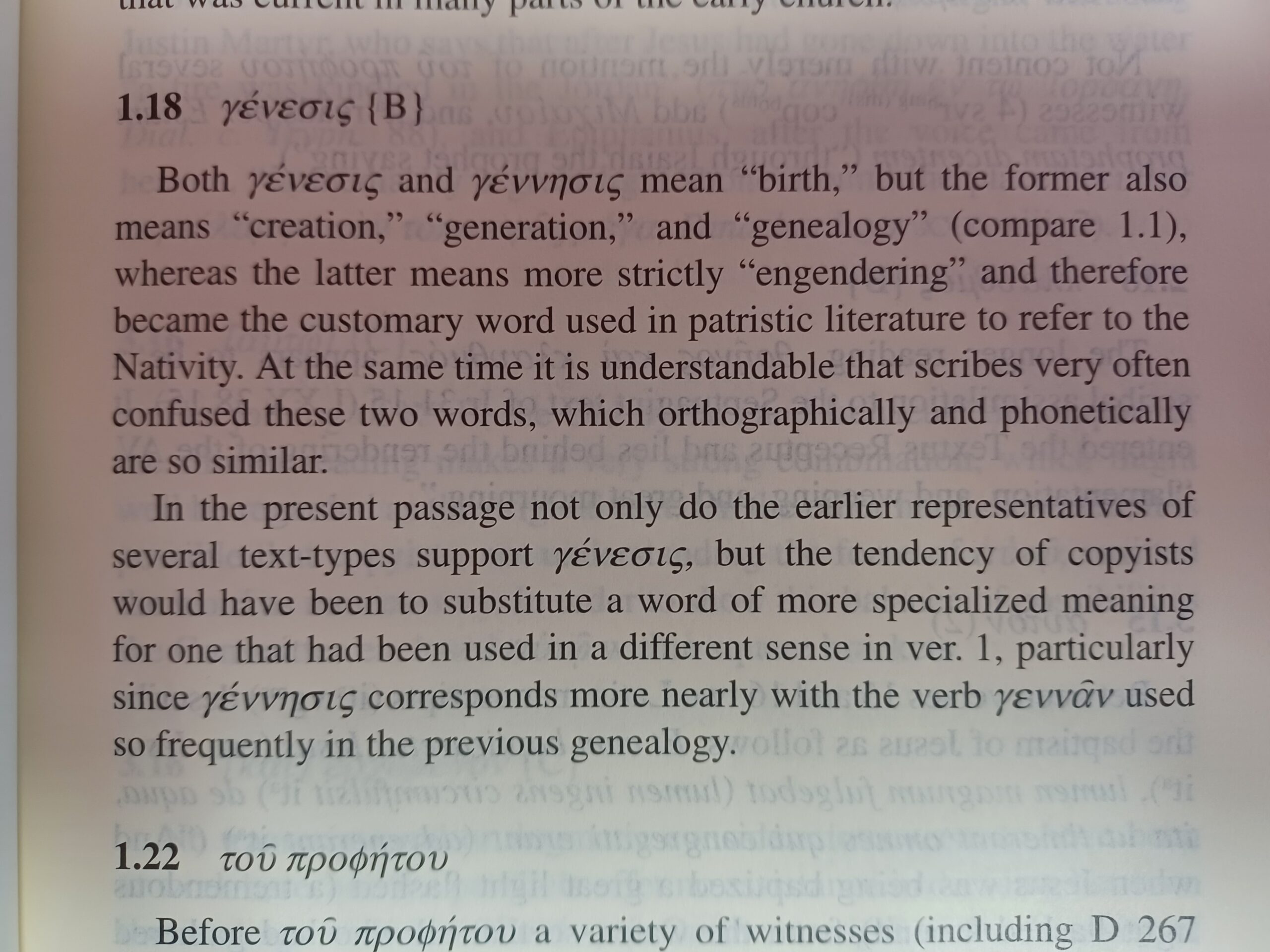
The textual issue in this verse concerns whether the original reading was γένεσις or γέννεσις. While both words can mean “birth,” the word γένεσις can have other meanings, such as “creation.”
Below, you can see images of Houghton’s notes on this variant.
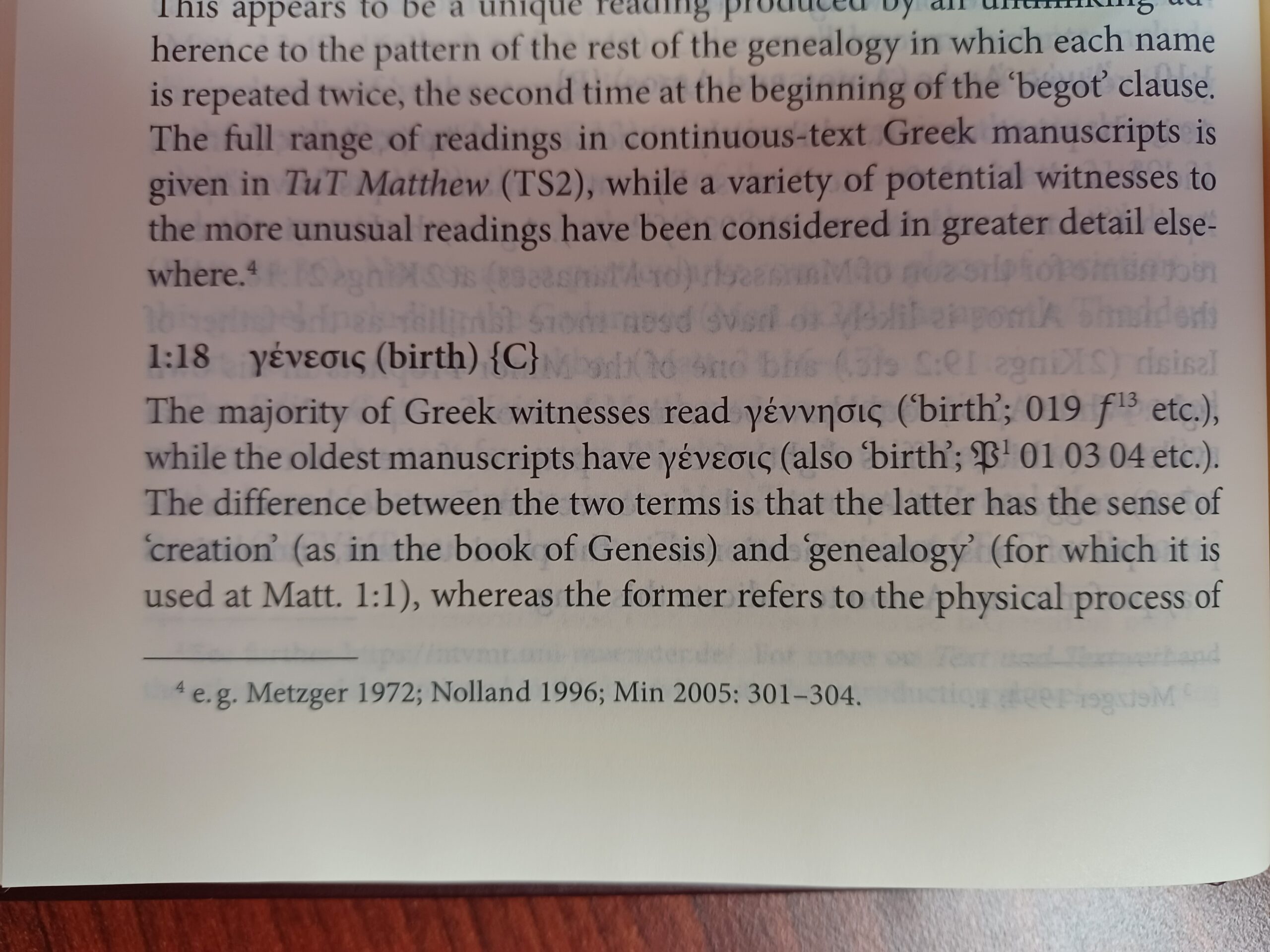
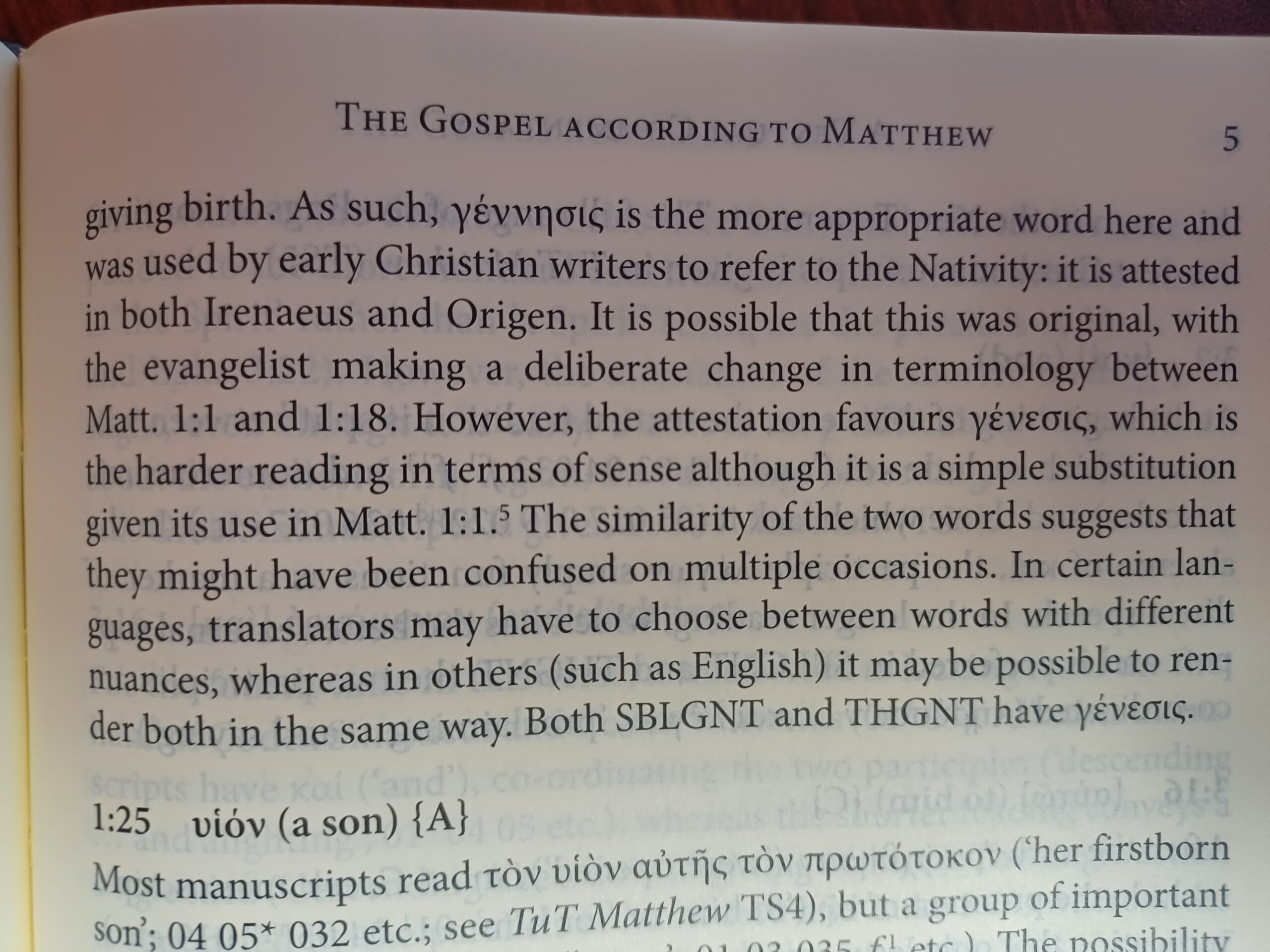
Houghton acknowledges that γέννεσις best aligns with early Christian usage, but he ultimately favors γένεσις based on the internal-criteria principle of lectio difficilior potior (“the more difficult reading is preferable”). He also points out that, according to external criteria, the oldest manuscripts contain γένεσις.
Below, you can see that Metzger reaches the same conclusions.
Houghton also interacts with recent scholarship, noting in a footnote that Tommy Wasserman has convincingly argued against theologically motivated scribes swapping in γέννεσις for γένεσις, as Bart Ehrman has suggested. Additionally, both the SBLGNT and THGNT have adopted the reading of γένεσις.
Houghton’s A Textual Commentary on the Greek New Testament is a great resource that students, scholars, and pastors will be consulting for years to come as they study the text of Scripture.
That’s it for the first of the “Twelve Reads of Christmas.” Most of these posts will be fairly short, and I’m looking forward to sharing more!
0 Comments